Government congratulated on new Cabinet threshold

Government congratulated on new Cabinet threshold

The announcement by the Abbott Government today that it has confirmed a new threshold for Cabinet approval of new medicines being listed on the Pharmaceutical Benefits Scheme is a welcome development.

Since 2001, medicines that were expected to cost more than $10 million in any one of the four years of the forward estimates were required to be approved by Federal Cabinet before they could be listed on the PBS.

The Government has announced that from today this threshold has increased to $20 million. This means that medicines expected to cost less than $20 million in any of the four years of the forward estimates will not require Cabinet approval. Instead, they will be listed promptly by the Health Minister.

“This is a welcome improvement to the PBS process,” said Dr Brendan Shaw, Medicines Australia Chief Executive.

“This is a policy change the industry has been advocating for a number of years, so to see it implemented today is appreciated.

“It is a common sense administrative change that improves the PBS listing process.

“Peter Dutton announced this as a Coalition election commitment and we congratulate him on delivering on that commitment in Government now as Health Minister.

“This improvement in the process should reduce the time for listing for some medicines on the PBS.

“This is good news for companies who’ll benefit from greater predictability, good news for government who’ll have more efficient processes, and, ultimately, good news for patients who’ll get access to new medicines sooner.

“Medicines Australia and its member companies are keen to work with the new Government to help deliver on its election commitments and ensure a predictable policy environment that provides medicines to Australians in the future.

“Together with the new PBS listings announced earlier this week, this announcement shows the Government understands the importance of a predictable policy approach to the PBS,” Dr Shaw said.

-ENDS-

Contact Person:

Alex Chapman
Phone: (02) 8281 3204
Email:
 alex@ogilvyprhealth.com

MA award recognises industry commitment

MA award recognises industry commitment

The 2013 Pat Clear Award, the Australian medicines industry’s most prestigious award, has been won by Sara Pantzer, Head of Government Affairs and Policy, Amgen Australia.

The Award is presented annually to recognise an outstanding performance and contribution by an individual, group or team who work in the industry.

Ms Pantzer has been a key player in shaping the policy landscape for the Australian medicines industry since joining the industry in 1995.

Medicines Australia Chief Executive, Dr Brendan Shaw, said Ms Pantzer is an excellent recipient for the award because she exhibited all three attributes assigned to the Pat Clear Award: commitment, determination and dedication.

“Sara is a valuable leader in the industry. Her enthusiasm, expertise, professionalism and commitment are legendary,” Dr Shaw said.

“For almost two decades Sara has helped the industry identify common positions and developed practical and effective solutions with the broader community. She is widely recognised for this amongst her industry peers and key stakeholders alike.

“Sara’s contribution has made a real difference to the industry, the community and patients.

“And she’s done it all with a good dose of humour too,” Dr Shaw said.

Sara was instrumental in developing the industry’s position on the Australia-United States Free Trade Agreement and was a major contributor to the industry’s position on reform of the Pharmaceutical Benefits Scheme in both 2006 and in 2010.

Most recently, Sara co-led the establishment of the Medicines Australia Oncology Industry Taskforce which has stimulated lively consideration and debate in the community about ways to give Australians reliable and timely access to cancer medicines.

The Pat Clear Award was established in 2002 to commemorate the substantial contribution Mr Clear made to the medicines industry in Australia during his 40-year career. Pat Clear had a passionate belief that the industry held an important place in Australian society, not just through the provision of medicines, but as a tool of social policy to make the country a fairer place for all.

-ENDS-

Contact Person:

Alex Chapman
Phone: (02) 8281 3204
Email:
 alex@ogilvyprhealth.com

Industry welcomes new Labor Shadow Ministry

Industry welcomes new Labor Shadow Ministry

Medicines Australia today congratulated the new Labor Shadow Ministers on their appointments.

“I’d like to congratulate the Hon Bill Shorten MP on being elected as Leader of the Labor Party,” said Medicines Australia Chief Executive, Dr Brendan Shaw.

“We look forward to working with him and his team on the important issues facing the Australian medicines industry and we welcome his personal interest in taking on the science portfolio.

Medicines Australia also congratulated former Minister for Health, the Hon Tanya Plibersek MP, on her election as Deputy Leader of the Opposition.

“We welcome today’s announcements of the Opposition’s new team who the industry will be working with,” Dr Shaw said.

“We look forward to working with the Hon Catherine King MP as Shadow Minister for Health and congratulate her on her appointment. We have worked with Ms King in her previous capacity as Parliamentary Secretary for Health and look forward to continuing the good working relationship we have.

“We’re also pleased with the appointment of Senator the Hon Kim Carr as Shadow Minister for Higher Education, Research, Innovation and Industry, who continues in the portfolio post-election. Senator Carr has much experience of the Australian medicines industry’s issues and we welcome his appointment.

“Congratulations also to Senator the Hon Penny Wong on her appointment to the important portfolio of Trade and Investment and to the Hon Shayne Neumann MP on his appointment as Shadow Minister for Ageing.

“We look forward to working with these and other Shadow Ministerial appointments in the future to progress the health, innovation and industry development issues confronting Australia’s medicines industry.”

-ENDS-

Contact Person:

Alex Chapman
Phone: (02) 8281 3204
Email:
 alex@ogilvyprhealth.com

Don’t import NZ medicines system to Australia

Don’t import NZ medicines system to Australia

Speaking at a Medicines New Zealand conference in Auckland today, Medicines Australia Chief Executive, Dr Brendan Shaw, said that Australia should avoid adopting the New Zealand model of medicines funding.

“While New Zealand has exported many good things to Australia, its system of funding medicines should not be one of them,” Dr Shaw said.

“One of our great concerns in Australia is that this reverence by a handful of academics for the New Zealand model has been entirely myopic, focussing only on cost and not on the full package of what the PHARMAC model brings.

“Looking only at the costs without considering the whole system is poor policy development.”

Dr Shaw highlighted some characteristics of the New Zealand model that had escaped attention in the Australian medicines policy debate, including:

  • New Zealand is consistently one of the worst performing countries in the OECD in international comparisons of consumer access to new medicines
    • Including the lowest reimbursement coverage for cancer medicines in developed countries
  • The lack of choice and availability of new therapies for New Zealand consumers and doctors, with around 77 medicines subsidised in Australia that are not subsidised in New Zealand
  • Even with the delays of new medicines in Australia, it takes two years longer to get a medicine reimbursed in New Zealand than it does in Australia
  • New Zealand doctors have at various times complained that their ability to treat patients is compromised by government officials over-committed to cost-containment, and
  • The PHARMAC model is less transparent than Australia, with New Zealand clinicians and consumers complaining about being left in the dark about how, why and when a medicine may or may not be reimbursed by the government.

“At a time when we are dealing with an ageing population, Australia needs a system that provides consumers and doctors with more choice, more treatment options and more new medicines, not less.”

The full text of Dr Shaw’s speech can be found here (please follow link)

-ENDS-

Contact Person:

Alex Chapman
Phone: (02) 8281 3204
Email:
 alex@ogilvyprhealth.com

The Great PBS Detour

The Great PBS Detour

Australians are seeing their access to new medicines on the Pharmaceutical Benefits Scheme delayed while billions of dollars were being taken out of the Scheme, Medicines Australia said today.

In a speech to the Eye for Pharma Sales and Marketing Conference in Sydney today, Medicines Australia Chief Executive called it the ‘Great PBS Detour’.

“The whole point of PBS reform and price disclosure, agreed by all sides of politics since the middle of the last decade, was to use those savings to fund new medicines for the Australian community,” Dr Shaw said.

“But today it appears that while the savings from price disclosure are pouring into the Treasury coffers, they are not being re-invested in new therapies for the Australian community.”

Over the last six months the May Budget, the Pre-Election Fiscal Outlook and the Final Budget Outcome 2012-13 have all revised downwards the future estimated spending for the PBS.

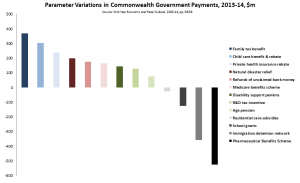
The Budget Outcome statement shows that the federal government spent $857 million less on medicines in 2012-13 than was expected just a few months ago in the May 2013 Budget and that spending fell by 3.5%, the biggest and only fall this century.

The forward estimates now show that it is expected that government spending on medicines will be $6 billion lower than previously expected over the next four years.

“The really astounding thing is that this is happening at the same time industry frustration with the PBS listing process is at an all-time high,” Dr Shaw said.

“The key issue for the PBS now is to make sure that the savings from price disclosure are being re-invested in new medicines for the community, as intended, and not used to fill the Treasury coffers.

“There’s no question the funds are there to do it.

“The issue is not whether the PBS is sustainable financially, but whether it is effectively doing its job as a major health program that meets the needs of the Australian community.”

The full speech can be viewed here (please follow link)

-ENDS-

Contact Person:

Alex Chapman
Phone: (02) 8281 3204
Email:
 alex@ogilvyprhealth.com

Final Budget Outcome confirms PBS spending going backwards

Final Budget Outcome confirms PBS spending going backwards

The Government’s Final Budget Outcome 2012-13 statement released today confirms that spending on the Pharmaceutical Benefits Scheme is going backwards, Medicines Australia said today.

“Today’s figures prove once and for all that the key issue for the PBS is ensuring that the savings from price disclosure are used to list new medicines,” said Medicines Australia Chief Executive, Dr Brendan Shaw.

“Incredibly, government spending on medicines for 2012-13 was $857 million below what the former government estimated only two months earlier in the May Budget.

“These huge cuts to PBS spending have come at a time when more and more medicines are facing a logjam in the listing process, patients are waiting for new therapies, and the PBS has seen the lowest number of new molecules listed in 20 years.”

The purpose of PBS reforms introduced by both Coalition and Labor governments since 2006 was to drive savings through off-patent price reductions to fund new medicines on the PBS in a timely manner.

The Outcome statement released today also shows that in 2012-13 government spending on medicines actually fell by 3.5% in 2012-13.

The Treasury said that the reduction in spending is due to the greater than expected impact of price disclosure and cost-sharing arrangements.

“It’s clear now that while the savings from price disclosure are coming by the truckload, the funds need to be invested in new therapies for things like cancer, diabetes and chronic pain,” Dr Shaw said.

“It’s imperative that the savings coming from price disclosure be used to speed up the listing of new medicines for the community.

“Industry looks forward to working with the new Government to ensure that the process for listing new medicines is efficient and that the substantial savings from price reductions are invested in new therapies for the Australian community.”

-ENDS-

Contact Person:

Alex Chapman
Phone: (02) 8281 3204
Email:
 alex@ogilvyprhealth.com

Medicines industry welcomes new Abbott Government

Medicines industry welcomes new Abbott Government

Medicines Australia today congratulated the Abbott Government on being elected and welcomed the incoming Ministers in the new Government.

“I’d like to congratulate Tony Abbott on being elected as Prime Minister and for forming his new Government,” said Medicines Australia Chief Executive, Dr Brendan Shaw.

“We look forward to working with him and his team on the important issues facing the Australian medicines industry.

“We’re delighted at today’s announcements of the Prime Minister’s new team who the industry will be working with.

“I congratulate the Hon Peter Dutton, Minister for Health and the Hon Ian Macfarlane, Minister for Industry on their appointments.

“With over four years as Shadow Health Minister, Mr Dutton understands how the business model of this industry operates and the important role we play in delivering medicines to Australian patients.

“Mr Macfarlane has also worked well previously with the industry as Industry Minister under the Howard Government. He understands the industry’s issues and we look forward to renewing our working relationship going forward.”

During the election campaign the Coalition made very welcome commitments to:

  • Restore the integrity and independence of the PBAC;
  • Restore the Cabinet threshold for the listing of PBS medicines at $20 million;
  • Ensure that patients have timely access to independently assessed innovative new medicine; and
  • Accelerate clinical trial reform.

These are welcome initiatives and the industry looks forward to working collaboratively with the new Government to ensure that they are implemented.

Reforms implemented by both sides of Parliament have ensured that the PBS is on a low growth trajectory.

Medicines Australia looks forward to working with the new Government in a co operative, no surprises environment that maintains the viability of the medicines industry in Australia and timely access to medicines for Australian patients.

-ENDS-

Contact Person:

Alex Chapman
Phone: (02) 8281 3204
Email:
 alex@ogilvyprhealth.com

Greens’ commitments on PBS predictability welcome

Greens’ commitments on PBS predictability welcome

Medicines Australia has welcomed the Greens’ commitments on the Pharmaceutical Benefits Scheme outlined in their health policy.

“I congratulate the Greens for their commitments on the predictability, independence and timeliness of the PBS processes”, said Medicines Australia chief executive Dr Brendan Shaw.

“Over the last few years the industry has been increasingly frustrated by a number of PBS processes, so the Greens’ commitments to support things like predictability in the process for listing new medicines, preserving the independence of the PBAC and getting new medicines listed in a timely manner are especially welcome.

“We’re also encouraged by the Greens’ support for PBS post-market reviews to be conducted at arm’s length from government and for ensuring these reviews are focussed on securing good health outcomes for patients.

“There are a number of major process and policy issues around PBS post-market reviews that have yet to be resolved, so the Greens’ support for ensuring good practice and correct focus in these is welcome.”

Medicines Australia’s 2013 election document calls on political parties to:

  • Reaffirm commitment to the National Medicines Policy
  • List promptly on the PBS all medicines recommended by the PBAC
  • Work with industry to ensure a fair, predictable and stable business environment
  • Improve PBS processes
  • Uphold and strengthen Australia’s intellectual property system: and
  • Commit to industry policies that keep the medicines industry investing in Australia.

Medicines Australia’s election document can be found here

-ENDS-

Contact Person:

Alex Chapman
Phone: (02) 8281 3204
Email:
 alex@ogilvyprhealth.com

Industry welcomes ALP boost to investment

Industry welcomes ALP boost to investment

Medicines Australia has welcomed the Government’s plan to boost biopharmaceutical innovation.

“It is great to see the Government making investments in manufacturing”, said Medicines Australia chief executive Dr Brendan Shaw.

“The Government’s announcement highlights the importance of partnership between government and the private sector to boost Australia’s international competitiveness and attract investment from overseas.”

“It is fantastic that three of Australia’s major pharmaceutical companies, GSK, AstraZeneca and CSL will be part of this project together with Monash University.

“Coming the same week as the Government’s substantial response to the McKeon review of medical research, it helps strengthen the case for Australia being a destination for global investment in the medicines industry.

“We have a real opportunity to build on Australia’s medicines industry and drive further collaboration between the industry and the public research sector.

“At a time when the global industry is actively looking for partnership opportunities to develop new medicines and vaccines, the Government’s announcements this week are very encouraging.

“Australia has always been great at inventing new medicines and vaccines, given our track record in medical research, and the challenge now is to build more commercial successes on the back of that.

“There’s some great stories of Australian ingenuity being commercially developed into successful medicines and vaccines for things like cervical cancer, influenza, skin cancer, pain management and stomach cramps. We just want to do more of this.

“Australia already earns more money exporting medicines than it does from exporting cars or wine, as well as being one of Australia’s great investors in R&D, and we want to build on that.”

The Australian medicines industry exports $4 billion a year and invests $1 billion a year in R&D.

-ENDS-

Contact Person:

Alex Chapman
Phone: (02) 8281 3204
Email:
 alex@ogilvyprhealth.com

Industry welcomes Coalition commitment to PBS

Industry welcomes Coalition commitment to PBS

Medicines Australia today welcomed the Coalition’s commitment to restore transparency, predictability and confidence to the process by which medicines are listed on the Pharmaceutical Benefits Scheme (PBS).

“A predictable, transparent and collaborative environment is critical to the future of the medicines industry in Australia”, said Medicines Australia Chief Executive Dr Brendan Shaw.

“Medicines Australia has been calling for years for the restoration of confidence in the independence and integrity of the Pharmaceutical Benefits Advisory Committee (PBAC) that is why we are backing today’s announcement.

Submissions of new medicines are receiving multiple rejections and delays, industry frustration is high, and the number of new molecules being listed is at 20 year lows.

“Medicines Australia particularly welcomes giving the Health Minister authority to list medicines that do not cost more than $20 million in their first four years. This measure has the potential to significantly streamline the listing process,” Dr Shaw said.

“It is vitally important that Australian patients can have confidence that they will continue to be able to access the latest scientific breakthroughs.

“Measures to accelerate clinical trial reform are also very welcome and have the potential to make tangible benefits to patients”.

As Medicines Australia outlined in its election priorities there is much to do including:

  • Urgently sitting down and examining the unintended consequences of the August 2 price disclosure changes with affected stakeholders
  • Applying procedural fairness, effective stakeholder consultation and consistent management to PBS post-market reviews
  • Drive savings in the off-patent F2 market with pricing based on market competition and invest those savings into the on patent F1 market for new medicines
  • Ensuring that the PBS is fit for purpose for the next generation of highly targeted medicines and an ageing population

-ENDS-

Contact Person:

Alex Chapman
Phone: (02) 8281 3204
Email:
 alex@ogilvyprhealth.com